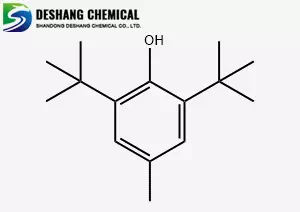
What is Butylated Hydroxytoluene CAS 128-37-0?
Antioxidant 264 is an excellent general-purpose phenolic antioxidant. It is non-toxic, non-flammable, non-corrosive, and has good storage stability. It can inhibit or delay the oxidation degradation of plastics or rubber, thereby extending their service life. Its appearance is white or light yellow crystalline powder. It is soluble in solvents such as benzene, toluene, methanol, ethanol, acetone, carbon tetrachloride, acetic acid, oils, esters, and gasoline, but insoluble in water and dilute sodium hydroxide solution. It is an excellent antioxidant additive for various petroleum products and is widely used in various lubricants, gasoline, paraffin, and various raw materials. It prevents the increase of acid value or viscosity of lubricating oil and fuel oil. In food-grade plastics and packaged foods, it can be used as a food antioxidant and stabilizer to delay food spoilage. It can also be used in polyethylene (PE), polystyrene (PS), PP (polypropylene), polyvinyl chloride, ABS resin, polyester, cellulose resin, and foam plastics (especially white or light-colored products), food-grade plastics, natural rubber, synthetic rubber (such as styrene-butadiene rubber, nitrile rubber, polyurethane, isoprene rubber, etc.), animal and plant oils, and foods and cosmetics containing animal and plant oils. The recommended dosage is generally 0.1% - 1.0%.
Butylated Hydroxytoluene CAS 128-37-0 Use
Used as an antioxidant for rubber, plastic, gasoline, transformer oil, turbine oil, animal and vegetable oils, and food products.
Plastic additives
BHT is a widely used oil-soluble antioxidant both domestically and internationally. Although it is relatively toxic, it has strong antioxidant capacity, good heat resistance and stability. It has no specific odor and does not undergo color reactions with metal ions. Moreover, it is inexpensive, being only 1/5 to 1/8 the price of BHA. It is still used as the main antioxidant in China. It is usually used in combination with BHA and is enhanced by citric acid or other organic acids. China stipulates that it can be used in edible oils, fried foods, biscuits, instant noodles, instant rice, canned nuts, dried fish products and cured meat products, with a maximum usage of 0.2g/kg. This product also has certain antibacterial effects, but they are weaker than those of BHA.
BHT can be used as a feed antioxidant to protect vitamins in the feed and prevent oxidation loss of fats and proteins. It also has certain antibacterial effects. The maximum usage is 150g/t. BHT is a widely used oil-soluble antioxidant both domestically and internationally. Although it is relatively toxic, its antioxidant capacity is strong. Chemicalbook. It has good heat resistance and stability, without any specific odor or color reaction with metal ions. Moreover, it is inexpensive, only 1/8 - 1/5 of BHA, and is still used as the main antioxidant in China. It is usually used in combination with BHA and with citric acid or other organic acids as synergists.
It is a general-purpose phenolic antioxidant. It is widely used in polymer materials, petroleum products and food processing industries. This product is a commonly used rubber antioxidant. It has certain protective effects against heat and oxygen aging, and can also inhibit copper damage. When used alone, it does not have ozone resistance, but when used in combination with ozone-resistant agents and wax, it can protect against the damage caused by various weather factors to vulcanized rubber. It can also be used as a gel inhibitor in styrene-butadiene rubber. It is generally used in rubber at a concentration of 0.5-3 parts. When the dosage increases to 3-5 parts, it will not flake. This antioxidant can also be used as a treatment and storage stabilizer for synthetic rubber and can be used in various rubber types such as styrene-butadiene rubber, butadiene rubber, ethylene-propylene rubber, and chloroprene rubber. Antioxidant 264 is an effective antioxidant in some high molecular materials. This product is an effective stabilizer in polyethylene, polyvinyl chloride (with a dosage of 0.01-0.1%), and polyvinyl ether. Antioxidant 264 is an excellent antioxidant for various petroleum products. It has good oil solubility. This product can also be used as an antioxidant in the food processing industry and can be used in foods with a high content of oil. The dosage in foods is less than 0.2 grams per kilogram, and in chewing gum, it is less than 0.75 grams per kilogram. The usage methods include immersion method, direct mixing method, mixing method after dissolving in ethanol, and spray method. The United States, Japan, and the European Community have all regarded this product as a legal feed additive. The European Community stipulates that the maximum dosage in feed is 150 ppm and can be used in various feeds.
Used for organic synthesis
It is suitable for use as an additive for anti-oxidation and anti-gumming of petroleum products, as well as a retardant for plastics and rubber.
Used as antioxidants for petroleum products, fuels, rubber, plastics, food, feed, and medicines, etc.
Organic synthesis. Antioxidant.
Butylated Hydroxytoluene CAS 128-37-0 safety
Toxicity classification
Poisoning
Acute toxicity
Oral - LD50 for rats: 890 milligrams per kilogram; Intraperitoneal injection - LD50 for mice: 650 milligrams per kilogram
Stimulating data
Skin - Rabbit: 500 mg / 48 hours, moderate; Eye - Rabbit: 100 mg / 24 hours, moderate
The explosive's hazardous properties are corrosive to the skin and cornea; it reacts violently with oxidants.
Flammable hazard characteristics
Heated, flammable by open flame; decomposes upon heating, emits irritating smoke
Storage and transportation characteristics
The warehouse should be well-ventilated, kept at low temperature and dry; store separately from oxidants.
Service
* Prompt reply and 24 hours online, professional team to provide best price and high quality product.
* Sample testing support.
* Every batch of products will be tested to ensureits quality.
*The packing also can be according the customers` requirment.
*Any inquiries will be replied within 24 hours.
*we provide Commerical Invoice, Packing List, Bill of loading, COA , Health certificate and Origin certificate. If your markets have any special requirements, let us know.