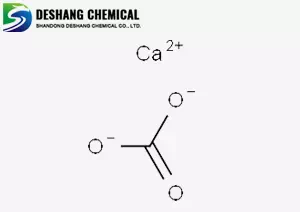
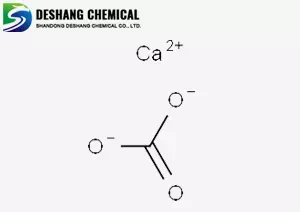
What is Calcium carbonate CAS 471-34-1?
Calcium carbonate is also known as limestone and chalk powder. It is a common chemical substance on Earth and belongs to inorganic salt minerals. It is alkaline, insoluble in water but soluble in acid. It is naturally present in rocks such as glauberite, calcite, chalk, limestone, large calcareous limestone, and limestone. In limestone layers, insoluble calcium carbonate reacts with water containing carbon dioxide to form calcium bicarbonate, and water containing calcium bicarbonate can also precipitate calcium carbonate. This is the reason for the formation of caves.
Calcium is essential for maintaining the normal functions of the human nervous system, muscles, skeletal system, cell membranes and capillary permeability. The main component of animal bones or shells is calcium carbonate. The calcium carbonate used in medicinal and edible additives is produced from calcite through processes such as purification, sterilization, filtration and refinement. Due to its calcium-supplementing properties after these processes, it is widely used in the production of penicillin, streptomycin and oxytetracycline. As an additive in food, it ensures the necessary calcium intake for the human body. It is used as a fortifier in products such as chewing gum, chocolate, and beverages like Wahaha, Jiunge Calcium, and Jiujiang Jelly, meeting the body's calcium requirements. According to different production methods, calcium carbonate can be classified into light calcium carbonate, heavy calcium carbonate and active calcium carbonate. Light calcium carbonate (abbreviated as light calcium) is prepared by calcining limestone and other raw materials to produce lime (mainly composed of calcium oxide) and carbon dioxide. Then, adding water to digest the lime to produce lime milk (mainly composed of calcium hydroxide), and then introducing carbon dioxide into the lime milk to form calcium carbonate precipitate. Finally, it is dehydrated, dried and ground to obtain. Alternatively, a calcium carbonate precipitate can be obtained through a double decomposition reaction using sodium carbonate and calcium chloride, and then dehydrated, dried and ground. It is mainly used as a filler in industries such as rubber, plastics, papermaking and coatings, inks, and is also used in toothpaste, tooth powder, cosmetics and other daily chemical products. It can also be used in organic synthesis, metallurgy, glass and asbestos production. Active calcium carbonate (abbreviated as active calcium) is prepared by surface-modifying light or heavy calcium carbonate with surface-modifying agents. After modification, the calcium powder surface forms a special coating structure, significantly improving the dispersion and affinity in polymer matrixes, and generating an interface effect with the polymer matrix, thereby enhancing the impact resistance of the product. It is an excellent incremental filler aid with excellent performance. Reacting with acids produces carbon dioxide gas that makes the lime solution turbid, which is the simplest method for identifying calcium ions.
Calcium carbonate CAS 471-34-1 Use
In recent years, with the rapid development of China's rubber industry, the usage of calcium carbonate has been continuously increasing. 1) Tires: Lightweight calcium carbonate and nano calcium carbonate are often partially substituted for low-structured carbon black and white carbon black in the rubber for car tire outer tire compounds (with a usage of over 70 parts) and inner tire compounds. They are also used in tire body cord compounds, air-tight layer compounds, inner liner compounds and inner tire compounds to reduce production costs. Additionally, nano calcium carbonate combined with ultra-fine active zinc oxide can replace ordinary zinc oxide to improve the tensile strength, elongation at break, flexural resistance and fatigue resistance of car tire tread compounds. 2) Rubber hoses and tapes: Lightweight calcium carbonate and nano calcium carbonate are used in rubber hoses and tapes. Firstly, they play the role of white reinforcing filler, and secondly, they improve the dispersion of the rubber compound. Calcium carbonate can be used in rubber hoses for ordinary rubber hoses, colored rubber hoses, hydraulic rubber hoses and short fiber reinforced rubber hoses, and in rubber tapes for conveyor belts, transmission belts and synchronous belts, etc. 3) Rubber shoes: Calcium carbonate can adapt to different color requirements and can improve the mixing and extrusion performance of the rubber compound. It is widely used in rubber shoes and is often used in combination with carbon black, white carbon black, titanium dioxide and kaolin for the upper, sole and heel parts of rubber shoes. 4) Electrical wires and cables: Calcium carbonate is generally used in combination with carbon black, white carbon black, kaolin and talc as reinforcing fillers for the sheaths of mine electrical wires, ship electrical wires, high-voltage electrical wires and electrical wire and cable compounds. In electrical wire and cable compounds made of chlorinated rubber, such as CR, chlorinated polyethylene rubber (CM) and chlorinated butadiene rubber, calcium carbonate not only plays the role of reinforcing filler but also reduces the acidity of the rubber compound and absorbs hydrogen chloride produced during the processing of the rubber compound, thereby avoiding the occurrence of sulfurization delay and reversion phenomena, and improving the extrusion performance of the rubber compound.
Calcium carbonate CAS 471-34-1 safety
Content Analysis
Calcium Reagent Preparation: Weigh 10 grams of analytical-grade sodium chloride that has been dried at 105-110℃ for 2 hours. Grind it finely in a mortar, then weigh 0.1 gram of calcium reagent (chromium blue ink R). Mix it with the sodium chloride in the same mortar. Store it in a brown bottle. Weigh 0.5 grams of the sample that has been dried at 110-120℃ to a constant weight (accurate to 0.0002 grams), place it in a 100 ml tall beaker, moisten it with a small amount of carbon dioxide-free water, cover with a surface cover, gradually add 1:1 hydrochloric acid solution until it is completely dissolved, dilute with water, and transfer it to a 250 ml volumetric flask, dilute to the mark with water, and shake well. Take 25 ml and add 5 ml of 30% triethanolamine solution, 25 ml of water, and 5 ml of 10% sodium hydroxide solution to make the pH ≥ 12. Add a small amount of solid calcium reagent, titrate with 0.02 mol/L ethylenediaminetetraacetic acid disodium (EDTA) standard solution. The solution changes from red to purple to pure blue. Calcium carbonate (%) = V × c × 0.1001 / G × 25 / 250 × 100, where V is the volume of EDTA standard solution consumed during titration (ml), c is the concentration of EDTA standard solution (mol/L), G is the sample weight (g), 0.1001 is the millimole quantity of calcium carbonate (g).
Toxicity
ADI is not subject to restrictive regulations (FAO/WHO, 2001). GRAS (FDA, §184.1191, §182.5191, 2000). LD50 6450mg/kg (rat, oral).
Toxicity
See heavy calcium carbonate or activated calcium carbonate.
Toxicity
Long-term inhalation of limestone dust often leads to atrophic catarrh of the upper respiratory tract, bronchitis, and pulmonary emphysema. Workers exposed to crushed limestone may develop diffuse-hardened type pneumoconiosis. The maximum allowable concentration of limestone dust is 6mg/m3, while the allowable concentration of marble dust in the United States is 10mg/m3. During work, it is necessary to protect the respiratory organs and skin by wearing masks, gloves, and work clothes to prevent inhalation of dust.
Limitation of use
GB2760—2001: Lightweight calcium carbonate can be used in various foods and gum bases that require the addition of leavening agents, in accordance with GMP. It can also be used as a flour improver at 0.03% (in flour); for milk powder, 7.5 - 18g/kg. For soy milk powder, soy flour, Chemicalbook, 4 - 20g/kg; for soft drinks, 0.4 - 3.4g/kg; for lotus root powder, 6 - 8g/kg; for ready-to-eat breakfast cereal products, 2 - 7g/kg (calculated as Ca; g/kg); for beverages, 1.6 - 3.2; for cereal products, 1.6 - 3.2; for infant food, 3.0 - 6.0 (calcium content 40%). FDA §184.1191 (2000): No restrictive regulations, GMP. BATF, 27CFR, §240.1051 (2000): Wine, 13.62kg/3785L. FAO/WHO (1984): Cocoa powder and sugar-containing cocoa powder, cocoa bean powder, cocoa block and cocoa oil cake, 5g/kg (based on fat-free cocoa portion, calculated by K2CO3); processed cheese 40g/kg (calculated as dry matter); only for physical preservation of concentrated juices, infant and children's cereal foods (in accordance with GMP); low concentration concentrated milk, sweet condensed milk, cream (used alone 2g/kg, combined with other stabilizers 3g/kg; calculated as dry matter); milk powder, cream powder 5g/kg (calculated as dry matter); jam and jelly 200mg/kg (calculated as Ca). It can also be used as a calcium fortifier for bread (0.25%), sugar food products, infant food (reduced milk powder, etc.), noodles, dairy products, table salt, fish cakes, sausages, spices, etc. Hardened water conditioner for brewing, acid remover for wine, neutralizer for malt sugar. Mixed with salt for pickling. For ice cream manufacturing and acidification manufacturing of glucose. When using polyphosphate as a quality improver for meat products, it is best to add calcium to balance calcium and phosphorus (addition amount 0.5% - 1.5%, calculated as Ca). 5% - 10% of calcium is added to the acrylvinyl gum base of chewing gum. For juice with excessive acidity (1.5% or more) during wine production, calcium carbonate (or potassium carbonate) can be used to remove part of the acid. For every 100L of grape juice, 0.1% of acid is removed, 66g of calcium carbonate is required. The acid can be removed after fermentation. Calcium can also be added in appropriate amounts in the composite leavening agent. To prevent hard candy from solidifying. To promote the crystallization of milk chocolate, the dosage is 2.4%. The highest usage limit in Japan (calculated as Ca): general food 1%, chewing gum 2%. It is prone to react with acids, alum, ammonium salts, and requires attention.
Service
* Prompt reply and 24 hours online, professional team to provide best price and high quality product.
* Sample testing support.
* Every batch of products will be tested to ensureits quality.
*The packing also can be according the customers` requirment.
*Any inquiries will be replied within 24 hours.
*we provide Commerical Invoice, Packing List, Bill of loading, COA , Health certificate and Origin certificate. If your markets have any special requirements, let us know.