What is D-(+)-Glucono-1,5-lactone CAS 90-80-2?
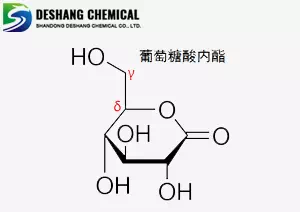
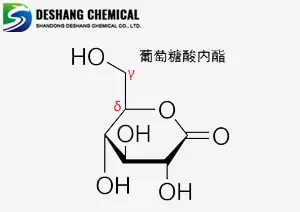
Glucosyl lactone is an ester formed by the dehydration of the carboxyl group of glucuronic acid and the hydroxyl group within the molecule, and is also known as glucuronic acid-δ-lactone when dehydrated from the hydroxyl group at the 5th carbon atom (δ position); and glucuronic acid-γ-lactone when dehydrated from the hydroxyl group at the 4th carbon atom (γ position). The crystals have a different sweet taste from that of glucuronic acid. It decomposes at 153℃, [α]D20 + 61.7° (C=1).
D-(+)-Glucono-1,5-lactone CAS 90-80-2 Use
Usage instructions: Use stabilizers, coagulants, and acidifiers.
1. Usage precautions
(1) This product hydrolyzes in an aqueous solution to produce gluconic acid, causing protein to coagulate. Its effect is better than that of calcium sulfate, calcium chloride, and brine. The tofu made with gluconic acid ester has good water retention properties, a fine and tender texture, and is delicious. It also has a preservative effect on tofu.
(2) As a preservative, it has a preservative effect on molds and common bacteria. It can be used for the preservation and freshness of fish, meat, poultry, and shrimp, making the products have a shiny appearance, not browning, and maintaining the elasticity of the meat.
(3) As a leavening agent, this product is combined with sodium bicarbonate to form baking powder. When heated, gluconic acid reacts with sodium bicarbonate to produce carbon dioxide, resulting in good foaming effect and no odor. It is particularly suitable for pastries, fried foods, etc.
2. Scope of Use and Dosage
(1) According to the "Food Additive Usage Hygiene Standard" (GB2760—1996) of China: Glucono-ester can be used for preserving fish and shrimp, with the maximum usage amount being 0.1g/kg, and the residue should be less than 0.01mg/kg; it can also be used in sausages (meat sausages), fish paste products, grape juice, and bean products (tofu, bean curd), with the maximum usage amount being 3.0g/kg; it can be used in baking powder, and the dosage can be used as needed for production.
(2) As stipulated by FAO/WHO (1984): It can be used in luncheon meat and minced meat, with a limit of 3g/kg.
(3) Practical Usage Reference: ① When making tofu, add 2.5-2.6g of this product per kilogram of soy milk. You can first dissolve this product in a small amount of water, then add it to the soy milk, or add the soy milk with this product to the container and heat it under water at 80℃ for 15 minutes to form tofu. ② Glucono-ester and sodium bicarbonate can be mixed in a ratio of 2:1 to form baking powder. The dosage can account for 50% to 70% of the acidulant. It can be used in biscuits, fried dough rolls, and bread, especially suitable for cakes. The dosage is approximately 0.13% of the wheat flour. ③ For luncheon meat, sausages, red sausages, etc., add 0.3% of this product. It can make the products have bright color, good water retention, elasticity, and have preservative effects, and can also reduce the formation of nitrosamines in the products. ④ As an chelating agent, it can be used in grape juice or other berry wines, which can prevent the formation of tartar. It can also be used in dairy products to prevent the formation of milk stones. ⑤ This product can be used as an acidulant in fruit juice beverages and jelly, and can also be mixed with sodium bicarbonate to form high-grade beverages. It not only has strong gas-producing power, but also can slowly hydrolyze glucose acid, having the characteristics of refreshing taste and no irritation to the stomach.
D-(+)-Glucono-1,5-lactone CAS 90-80-2 safety
ADI has no specific regulations (FAO/WHO, 2001). LD50: 7.63g/kg (rabbit, intravenous injection). GRAS (FDA, §184.1318, 2000).
GB2760—96: Luncheon meat, sausages (meat sausages), fish paste products, milk, grape juice, bean products (tofu, bean curd, bean brain extract), 3.0g/kg; Fish and shrimp preservation, Chemicalbook 0.01g/kg (residue 0.01mg/kg); Compound baking powder, GMP. FAO/WHO (1984): Luncheon meat, cooked minced meat, 3g/kg.
Service
* Prompt reply and 24 hours online, professional team to provide best price and high quality product.
* Sample testing support.
* Every batch of products will be tested to ensureits quality.
*The packing also can be according the customers` requirment.
*Any inquiries will be replied within 24 hours.
*we provide Commerical Invoice, Packing List, Bill of loading, COA , Health certificate and Origin certificate. If your markets have any special requirements, let us know.