What is Ethyl silicate CAS 78-10-4?
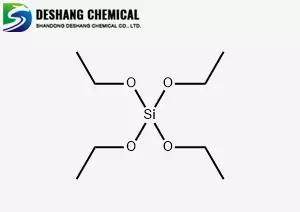
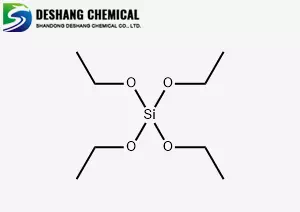
Ethyl silicate is also known as tetraethyl silicate or tetraethoxy silane. It is a colorless transparent liquid with a peculiar odor. It is stable in the absence of water, decomposes into ethanol and silicic acid upon contact with water, becomes turbid in humid air, and is soluble in organic solvents such as alcohols and ethers. It is toxic and has a strong irritant effect on the eyes and respiratory tract. It is prepared by the distillation of the reaction between silicon tetrachloride and anhydrous ethanol. It is used to produce heat-resistant and chemically resistant coatings, organic silicon solvents, and can also be used in organic synthesis, as a basic raw material for advanced crystals, optical glass treatment agents, binders, insulating materials for the electronics industry, etc.
Ethyl silicate CAS 78-10-4 Use
Ethyl silicate (TEOS) is a colorless liquid and is mainly used as a heat-resistant coating, a chemical-resistant coating, a silane coupling agent, an organic synthesis intermediate, and a precursor for Chemicalbook chemical vapor deposition (CVD) SiO2 films in the semiconductor field. The melting point of ethyl silicate is -77℃, the boiling point is 165.5℃, it is slightly soluble in water, and soluble in ethanol and ether.
The electronic industry uses it as an insulating material, as well as a processing agent for optical glass and a condensing agent.
Used for precision casting, as a binder for sand molds; the metal surfaces treated with ethyl silicate vapor can be protected against corrosion and water damage. Ethyl silicate can be used to infiltrate silicon onto metal surfaces, and when used to treat optical glass, it can increase light transmittance; the extremely fine Chemicalbook silicon oxide powder produced after complete hydrolysis can be used to manufacture fluorescent powder. Ethyl silicate is the raw material for organic silicon oil. Ethyl silicate can also be used to manufacture heat-resistant and chemical-resistant coatings. In Japan, 90% of ethyl silicate is used as the base material for anti-corrosion coatings (zinc-rich paint).
Mainly used for chemical-resistant coatings and heat-resistant coatings, organic silicon solvents and precision adhesion agents. After complete hydrolysis, it produces extremely fine silica powder, which is used for manufacturing fluorescent powders and can also be used as chemical reagents.
Tetraethoxysilane is mainly used in optical glass, chemical-resistant coatings, heat-resistant coatings and adhesives; modification of anti-corrosion coatings; crosslinking agents, adhesives, desiccants; catalyst frameworks, and the manufacture of high-purity ultrafine silica.
Ethyl silicate is mainly used in optical glass, chemical-resistant coatings, heat-resistant coatings and adhesives; modification of anti-corrosion coatings; crosslinking agents, adhesives, desiccants; catalyst frameworks, and the manufacture of high-purity ultrafine silica.
Electronic industry uses insulating materials, coatings, optical glass treatment agents, condensers, organic synthesis, and solvents for preparing organosilicon.
In the embedded compound formed by H+-magadiite, it will react with dodecylamine and be used for the study of mixed metal bioactive glass. It is commonly used as a precursor in the preparation of dry gels.
Ethyl silicate CAS 78-10-4 safety
Flammable liquid
Poisoning
Oral - LD50 for rats: 6270 milligrams per kilogram; Inhalation - LCL0 for rats: 85 grams per cubic meter
Skin - Rabbit 500 mg / 24 hours - Moderate; Eyes - Rabbit 500 mg / 24 hours - Mild
Can explode when mixed with air
Flammable; Toxic silicon oxide fumes are emitted during the fire scene.
The warehouse is kept well-ventilated, at a low temperature and dry; it is stored and transported separately from oxidants.
Foam, dry powder, carbon dioxide, sand dust
TWA: 85 milligrams per cubic meter; STEL: 170 milligrams per cubic meter
Service
* Prompt reply and 24 hours online, professional team to provide best price and high quality product.
* Sample testing support.
* Every batch of products will be tested to ensureits quality.
*The packing also can be according the customers` requirment.
*Any inquiries will be replied within 24 hours.
*we provide Commerical Invoice, Packing List, Bill of loading, COA , Health certificate and Origin certificate. If your markets have any special requirements, let us know.