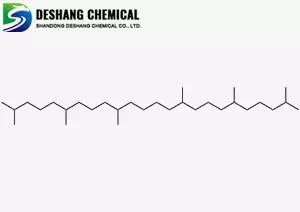
What is Squalane CAS 111-01-3?
Squalane is an important component found in human sebum. The sebaceous glands in human skin secrete sebum, which contains approximately 10% squalene and 2.4% squalane. The human body can convert squalene into squalane. Squalene provides oxygen and nutrients to cells and promotes cellular metabolism. It forms a lipid layer on the outer layer of the skin, preventing water loss and isolating bacteria, dust, and ultraviolet damage. However, the secretion of squalene in women begins to sharply decrease around the age of 25. This is followed by problems such as dry skin, sagging, dullness, and aging. Therefore, replenishing squalane to the skin is extremely important! The cosmetic effects of squalene and squalane are almost the same, but squalene has an unstable molecular structure and is prone to oxidation, so it is usually encapsulated in capsules and suitable for internal use; while squalane is a stable pure oil that is suitable for external use.
Squalane has excellent permeability and can penetrate deep into the skin to replenish cell lipids and nourish the skin. After massaging the skin with squalane, the skin will become soft, moisturized and elastic. This is the result of squalane penetrating into the skin and exerting its effects. Squalane forms a breathable and water-permeable protective film on the skin's surface. Its advantage is that it is not thick, but has moderate moisturizing properties. In particularly dry and cold seasons, if only using squalane, the water retention ability is insufficient. It is necessary to use other products in combination.
Main Effects
Squalane is a hydrocarbon oil obtained by hydrogenation of squalene extracted from the livers of deep-sea sharks. It is also known as deep-sea shark liver oil. Scientific research has found that squalane is one of the rare animal oils with high chemical stability and excellent usage performance. It has good affinity for the skin and has low polarity and medium spreading property. 1. Squalane (Squalane): Enhances epidermal repair, effectively forms a natural protective film, and helps maintain the balance between the skin and sebum. 2. Squalane is the closest to human sebum among chemical substances. It has strong affinity and can integrate with the human own sebum membrane, forming a natural barrier on the skin surface. 3. Squalane can also inhibit the peroxidation of skin lipids, effectively penetrate the skin, and promote the proliferation of skin basal cells. It has obvious physiological effects on delaying skin aging, improving and eliminating hyperpigmentation. 4. Squalane can also open up skin pores, promote blood microcirculation, enhance cell metabolism, and help repair damaged cells.
Squalane CAS 111-01-3 Use
1. Squalane is widely used as a base material for cosmetics and as an emulsifier in refined cosmetics, precision machinery lubricants, medical ointments, and high-grade soaps.
2. Squalane is a natural product that is inert and non-toxic. It has excellent skin affinity and does not irritate the skin or cause allergies. It can accelerate the penetration of other active substances into the skin. Squalane is a high-grade cosmetic oil-based raw material, such as various creams and lotions, Chemicalbook, eyeliner cream, eye shadow cream, and hair conditioners, etc. Cosmetics mostly use natural products directly extracted from fish liver oil. Synthetic products have a stimulating effect on the human body and are only used as lubricants and UV protectants.
3. Squalane is the most commonly used standard non-polar stationary liquid, with its polarity set to zero. The interaction force between this type of stationary liquid and the component molecules is dispersion force, and it is mainly used for the separation of general hydrocarbons and non-polar compounds.
Service
* Prompt reply and 24 hours online, professional team to provide best price and high quality product.
* Sample testing support.
* Every batch of products will be tested to ensureits quality.
*The packing also can be according the customers` requirment.
*Any inquiries will be replied within 24 hours.
*we provide Commerical Invoice, Packing List, Bill of loading, COA , Health certificate and Origin certificate. If your markets have any special requirements, let us know.