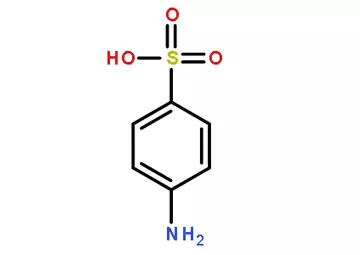
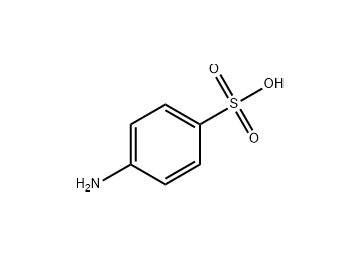
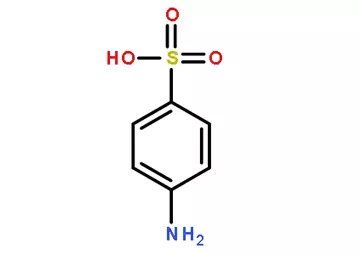
What is Sulfanilic acid CAS 121-57-3?
Uses and synthesis methods of p-aminobenzenesulfonic acid
Chemical property
White or off-white crystal. Hydrates lose water at 100 ° C, and anhydrates begin to decompose and carbonize at 280 ° C. The relative density is 1.485 (25/4). Slightly soluble in cold water, insoluble in ethanol, ether and benzene, significantly acidic, soluble in caustic soda solution and sodium carbonate solution.
use
It is mainly used for the manufacture of dyes, printing and dyeing auxiliaries and the prevention and control of wheat rust and used as spices, food coloring, medicine, whitening agents, pesticides and other intermediates, it can be used as a reference reagent, experimental reagent and chromatographic analysis reagent, for organic synthesis and chemical analysis process.
SulfanilicacidisatoxicmetaboliteofTartrazine (T007700). UsedasEhrlich holmium reaChemicalbookgent, fordetectingofnitrites. Antibact erial. Determination of ammonia, cerium, and nitrite, determination of aluminum, magnesium, potassium, sodium, iodine, iodide, and nitrite. Elemental analysis standards for carbon, hydrogen, nitrogen, oxygen and sulfur, determination of nitrite with 1-naphthylamine, testing of osmium and ruthenium, indirect determination of potassium through potassium nitrite, determination of serum bilirubin, soil analysis.
Production method
P-aminobenzenesulfonic acid can be obtained by the reaction of aniline and sulfuric acid to form a salt and then translocation.
Stimulus data
Skin - Rabbit 500 mg /24 h mild; Eye - Rabbit 100 mg /24 h moderate
Flammability hazard characteristics
Combustion produces toxic nitrogen oxide and sulfur oxide gases
Storage and transportation characteristics
Warehouse ventilation and low temperature drying; Store and transport separately from food raw materials
Fire extinguishing agent
Dry powder, foam, sand
Risk profile
【 Health Hazard 】 Harmful to the body if ingested, inhaled or absorbed through the skin. Has a stimulating effect.
[Environmental hazards] It is harmful to the environment and can cause pollution to water and atmosphere.
[Explosion hazard] This product is non-combustible and irritant.
First aid measure
[Skin contact] Remove contaminated clothing and rinse with running water.
[Eye contact] Lift eyelid and rinse with running water or normal saline. Seek medical attention.
[Inhalation] Remove from scene to fresh air. Administer oxygen if breathing is difficult. Seek medical attention.
【 Ingestion 】 Drink enough warm water to induce vomiting. Seek medical attention.
Fire protection measures
[Dangerous characteristics] Decomposition by heat, releasing toxic gases such as nitrogen and sulfur oxides.
【 Harmful combustion products 】 Carbon monoxide, carbon dioxide, sulfide, nitrogen oxide.
[Fire extinguishing method] The fire personnel must wear the whole body fire protective clothing and extinguish the fire in the upwind. When extinguishing the fire, move the container from the fire to an open area as much as possible.
Leakage emergency treatment
[Emergency treatment] Isolate the contaminated area and restrict access. It is recommended that emergency personnel wear dust masks (full face masks) and protective clothing. Avoid dust, sweep it up carefully, place it in a bag and transfer it to a safe place. If a large amount of leakage, with plastic sheet, canvas cover. Collect and recycle or transport to waste disposal site for disposal.
Contact control/Personal protection
[Engineering control] Closed operation, local exhaust.
[Respiratory system protection] When the concentration of dust in the air exceeds the standard, a self-priming filter dust mask must be worn. In case of emergency rescue or evacuation, you should wear
Air breathing apparatus.
[Eye protection] Wear chemical safety glasses.
[Body protection] Wear protective work clothes.
[Hand protection] Wear rubber gloves.
[Other protection] After work, shower and change clothes. Pay attention to personal hygiene. Get regular checkups.
Sulfanilic acid CAS 121-57-3 Use
It is used for manufacturing azo dyes, etc., and also serves as a pesticide for controlling wheat rust
P-aminobenzenesulfonic acid is mainly used in the production of dyes, printing and dyeing auxiliaries, the prevention and control of wheat rust, and as an intermediate for fragrances, food colorings, medicines, brighteners, pesticides, etc. It can be used as a standard reagent, experimental reagent and chromatographic analysis reagent, and is applied in organic synthesis and chemical analysis processes. SulfanilicacidisatoxicmetaboliteofTartrazine (T0077Chemicalbook00). UsedasEhrlich holmium 檚 reagent, fordetectingofnitrites. Antibact erial.
Verify ammonia, cerium and nitrite, and determine aluminum, magnesium, potassium, sodium, iodine, iodide and nitrite. Elemental analysis standards for carbon, hydrogen, nitrogen, oxygen and sulfur, determination of nitrite in combination with 1-naphthylamine, detection of osmium and ruthenium, indirect determination of potassium through potassium nitrite, determination of serum bilirubin, soil analysis.
Sulfanilic acid CAS 121-57-3 safety
Toxicity classification
Low toxicity
Acute toxicity
Oral administration - Rat LD50: 12,300 mg/kg irritation data skin - Rabbit 500 mg / 24-hour mild. Eye - Rabbit 100 mg /Chemicalbook24 hours Moderate
Flammable hazardous characteristics
Combustion produces toxic nitrogen oxide and sulfur oxide gases
Storage and transportation characteristics
The warehouse is well-ventilated, low-temperature and dry. Store and transport it separately from food raw materials
Fire extinguishing agent
Dry powder, foam, sand
Service
* Prompt reply and 24 hours online, professional team to provide best price and high quality product.
* Sample testing support.
* Every batch of products will be tested to ensureits quality.
*The packing also can be according the customers` requirment.
*Any inquiries will be replied within 24 hours.
*we provide Commerical Invoice, Packing List, Bill of loading, COA , Health certificate and Origin certificate. If your markets have any special requirements, let us know.