What is Adipic acid CAS 124-04-9?
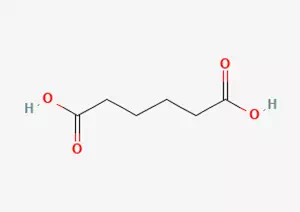
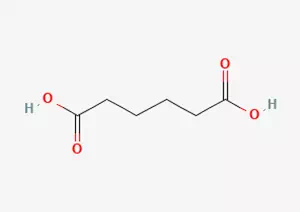
Adipic acid holds a unique and significant position and is also well-known as a "fatty acid". Its precise chemical formula is HOOC(CH2)4COOH, and its molecular weight has been precisely determined to be 146.14. This substance is not a rare one and can be found in beet juice.
From the appearance, adipic acid appears as white crystals or crystalline powder. It is odorless and tasteless, but when you place it on your tongue, you will sense a unique sour taste, which has a certain soft and sour characteristic. In terms of physical properties, its melting point is stable at 152° C. It will boil when the temperature rises to 330.5°C, and its self-ignition temperature level reaches 420°C. It is worth mentioning that adipic acid has the property of sublimation and does not absorb moisture, showing considerable stability under normal conditions.
In terms of solubility, adipic acid has different performances. It is readily soluble in boiling water and can also be easily dissolved in methanol, ethanol and acetone. However, its solubility in water and cyclohexane is relatively low, its solubility in ether is even weaker, and it is almost insoluble in benzene and ether. When adipic acid is in a liquid state, it exhibits acidity, and its pH value varies at different concentrations. The pH value of a saturated solution is 2.7, while that of a 0.1% aqueous solution is 3.2. Its dissociation constant K1 is precisely 3.90×10⁻⁵ and K2 is 5.29×10⁻⁶.
Adipic acid belongs to the carboxylic acid class of organic compounds and has extensive applications in the field of chemistry. It can be used as a chemical reagent in the processes of plastic and organic synthesis. It plays a crucial role in industrial production and is one of the most important aliphatic dicarboxylic acids to date, becoming the standard equipment for various chemical projects. According to statistics, the amount of adipic acid used in the synthesis of nylon 66 worldwide each year is as high as approximately 3 million barrels.
From the perspective of chemical properties, adipic acid is defined as being converted into cyclopentanone through home heating and decarboxylation. In terms of industrial preparation, adipic acid is ultimately obtained through a series of complex chemical reactions using phenol, cyclohexane or tetrahydrofuran as raw materials.
One of the most well-known uses of adipic acid is as an important raw material for the synthesis of nylon 66 (polyhexamethylenediamine) fibers. In addition, it can also play a key role in many fields, such as being used in the synthesis of polyester, providing a basis for the production of polyester materials; It is also indispensable in the synthesis of polyurethane; It can be used as a lubricant to reduce the friction between mechanical components. It can also act as a plasticizer to improve the performance of plastics. Even in the food industry, adipic acid has its place, being used as a gelling agent for seasoning, adding unique flavors and characteristics to the taste and texture of food.
Adipic acid CAS 124-04-9 Uses
In today's rich and diverse fields such as chemical engineering and food, adipic acid plays a crucial and diverse role. It is not merely a simple chemical substance, but also one of the indispensable key resources in the process of drug research and development and production. In the field of pharmaceuticals, adipic acid, with its unique chemical properties, participates in the synthesis and preparation of numerous drugs, providing strong support for the development of the pharmaceutical industry.
Meanwhile, adipic acid also plays an important role in yeast filtration. It can effectively assist the yeast filtration process, ensure the purity and quality of yeast products, and enable yeast to play a better role in many related industries such as food and brewing.
In the agricultural field, adipic acid is also an important resource for pesticide production. It can participate in the synthesis process of pesticides through specific chemical reactions, helping to enhance the performance and efficacy of pesticides and providing a strong guarantee for the growth and protection of crops.
Not only that, adipic acid also holds an irreplaceable position in the manufacturing of adhesives. It can interact with other components to form adhesives with strong bonding power, which are widely used in various industries such as wood processing, automotive manufacturing, packaging, etc., providing a solid foundation for the development of these industries.
In the field of materials science, adipic acid has demonstrated its outstanding performance. It is one of the key raw materials for synthesizing natural leather. Through a series of chemical reactions and processing techniques, synthetic leather with excellent performance and texture can be produced, meeting people's demands for high-quality leather products. Meanwhile, adipic acid also plays an important role in the production of artificial dyes and fragrances. It can participate in the synthesis process of dyes and fragrances, endowing products with unique colors and fragrances, and adding rich colors and wonderful experiences to people's lives.
In addition to its wide application in the above fields, adipic acid is also used as a raw material for polyurethane elastomers. During the production process of polyurethane elastomers, adipic acid reacts with other raw materials to form polymer materials with excellent elasticity and wear resistance. This material is widely used in multiple fields such as car tires, sports shoes, and industrial belts, making significant contributions to the performance improvement of these products.
In the food and beverage industry, adipic acid also performs outstandingly. It is an ideal acidifier. Many foods and beverages add adipic acid to regulate acidity. Moreover, compared with other common acidifiers such as citric acid and tartaric acid, adipic acid usually has superior performance. It can effectively adjust the acidity of food and beverages without changing their original flavors, making the taste more refreshing and pleasant.
It is worth mentioning that adipic acid is mainly used as the basic material for nylon 66. Nylon 66, as an important engineering plastic, features excellent properties such as high strength, high temperature resistance, and corrosion resistance, and is widely used in numerous fields including automobiles, electronics, and machinery. During the production process of nylon 66, adipic acid undergoes polymerization reactions with other raw materials, forming this high-performance polymer material, which provides important support for the development of modern industry.
In addition, adipic acid also has extensive applications in the design of plastics, materials, plasticizers, lubricants, polyurethanes and artificial additives, etc. In plastic manufacturing, adipic acid can enhance the performance of plastics, endowing them with better flexibility, heat resistance and weather resistance. In the field of materials, it can serve as an important additive, endowing materials with specific properties and functions. As a plasticizer, adipic acid can enhance the flexibility and plasticity of plastics, making them easier to process and use. In terms of lubricating substances, adipic acid can be used to prepare high-performance lubricants, reducing the wear of mechanical equipment and extending the service life of the equipment. In the production of polyurethane, adipic acid is one of the indispensable raw materials, which can affect the performance and quality of polyurethane. Meanwhile, in the manufacturing of artificial additives, adipic acid can also play a significant role, providing assistance in enhancing the performance of the products.
In addition, adipic acid is also used to manufacture various ester products. These ester products have multiple applications. They can serve as plasticizers to enhance the performance of plastics and also act as advanced lubricants, playing a significant role in fields such as mechanical processing and automotive manufacturing.
From the perspective of food application, adipic acid is an excellent acidifier and also a unique flavoring agent. Its quality is very stable and will not change easily due to variations in environmental factors. In the food industry, adipic acid is widely used in the production of products such as powdered beverages, drinks, gelatin desserts, lozenges and canned vegetables. In both powdered and regular beverages, adipic acid can adjust the acidity of the drinks, making their taste more balanced and pleasant. In the production of gelatin desserts, it can endow the desserts with a unique sourness and enhance the flavor layers of the desserts. For lozenges, the sour taste of adipic acid can stimulate saliva secretion and freshen the breath. In canned vegetables, adipic acid can maintain the color and taste of the vegetables and extend the shelf life of the products.
In addition, adipic acid is also used as a leavening acidifier in cooking powder. During the fermentation process of cooked flour, adipic acid can provide a suitable acidic environment, promoting the smooth progress of the fermentation process and giving the cooked flour a better taste and texture.
Adipic acid can also be used as a buffer solution in the process of food preparation. It can effectively maintain the acidity of food within the pH range of 2.5 to 3.0, ensuring the stability and safety of food. Meanwhile, adipic acid is also added and used in some food preparation oils. It can prevent rancidity, extend the shelf life of oils and fats, and ensure the quality and safety of food.
In today's rich and diverse fields such as chemical engineering and food, adipic acid plays a crucial and diverse role. It is not merely a simple chemical substance, but also one of the indispensable key resources in the process of drug research and development and production. In the field of pharmaceuticals, adipic acid, with its unique chemical properties, participates in the synthesis and preparation of numerous drugs, providing strong support for the development of the pharmaceutical industry.